The Polish-Lithuanian Commonwealth This volume provides a fresh perspective of the history and legacy of the Polish-Lithuanian Commonwealth, as well as the often-disputed memory of it in contemporary Europe.
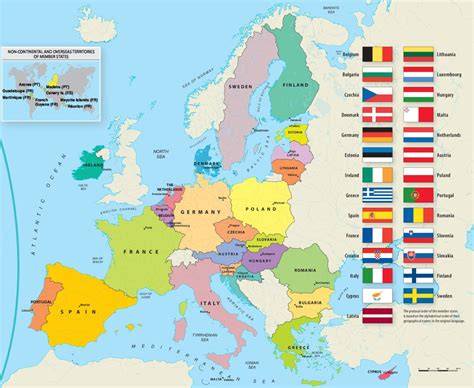
The unions between the Crown of the Kingdom of Poland and the Grand Duchy of Lithuania have fascinated many readers particularly because many solutions that have been implemented in the European Union have been adopted from its Central and Eastern European predecessor.
The collection of essays presented in this volume are divided into three parts-the Beginnings of Poland-Lithuania, the Polish-Lithuanian Commonwealth and Legacy and Memory of the Polish-Lithuanian Commonwealth-and represent a selection of the papers delivered at the Third Congress of International Researchers of Polish History which was held in Cracow on 11-14 October 2017.
Through their application of different historiographical perspectives and schools of history they offer the reader a fresh take on the Commonwealth’s history and legacy, as well as the memory of it in the countries that are its inheritors, namely Poland, Lithuania, Latvia, Belarus and Ukraine.
An exploration of one of the biggest countries in Early Modern Europe, this will be of interest to historians, political scientists, cultural anthropologists and other scholars of the history of Central and Eastern Europe in the Early Modern period.
Andrzej Chwalba is Professor of Social and Religious History of 19thand 20th-century Europe with special consideration for Poland at the Institute of History at Jagiellonian University, Poland.
Krzysztof Zamorski is Professor at the Institute of History at Jagiellonian University, Poland.
All rights reserved.
No part of this book may be reprinted or reproduced or utilised in any form or by any electronic, mechanical, or other means, now known or hereafter invented, including photocopying and recording, or in any information storage or retrieval system, without permission in writing from the publishers.
Obsah a struktura studie
Contents List of Illustrations viii List of Contributors xi Introduction 1 ANDRZEJ CHWALBA AND KRZYSZTOF ZAMORSKI 1 The Polish-Lithuanian Commonwealth: HistoryLegacy-Memory 26 ANTONY POLONSKY
PART I The Beginnings of Poland-Lithuania 39 2 The Principles of Ancient Rzeczpospolita Formation: The Medieval Ruthenian Dimension 41 MYROSLAV VOLOSHCHUK 3 Words for Images: On Perceptions of ‘Greek Manner’ in Lithuania and Poland 60 GIEDRĖ MICKŪNAITĖ 4 Religious Tolerance and Intolerance in Vilnius in the Sixteenth and Seventeenth Centuries TOMASZ KEMPA
PART II The Polish-Lithuanian Commonwealth 157 5 “A Free and Feudal Government”: Civic Republican Mentalities in the Cities of the Polish-Lithuanian Commonwealth 159 CURTIS G. MURPHY 6 Electing Kings With All Manner of Freedom: The Polish-Lithuanian Elective Monarchy in Context 179 FELICIA ROŞU 7 Cases of the Expulsion of Jews From the Towns of the Grand Duchy of Lithuania: Strategies of the Burghers and the Jews 195 JURGITA ŠIAUČIŪNAITĖ-VERBICKIENĖ 8 Tolerance as a Non-Topic: Cooperation on Behalf of the Town Between Catholics, Jews and Protestants in Early Modern Rzeszów 215 YVONNE KLEINMANN 9 The Medical Science Heritage of French Physicians in Lithuania in the Last Quarter of the Eighteenth Century: Jean-Emmanuel Gilibert, Nicolas Regnier and Jacques Briotet 234 ARNAUD PARENT 10 Discourses of Tolerance and Intolerance at the Four Years’ Sejm (1788-1792) 256 RICHARD BUTTERWICK
PART III Legacy and Memory of the Polish-Lithuanian Commonwealth 273 11 The Frames of Reference of an Eighteenth-Century Jewish Galician Merchant (Based on the Writings of Dov Ber Birkenthal) 275 GERSHON DAVID HUNDERT 275 12 The Rights and Privileges of the Polish-Lithuanian Nobility: A Benchmark for the Russian Empire’s Legislation of the Latter Half of the Eighteenth and Early Nineteenth Century? 292 TAMARA BAIRAŠAUSKAITĖ 13 France Facing the Independence of Poland: New Historiographical Approaches 304 FRÉDÉRIC DESSBERG 14 The French Position on the Polish Cause in 1918: Historical Borders and Principle of Nationalities 319 ISABELLE DAVION 15 The Polish-Lithuanian Commonwealth in the Politics of Memory in Belarus 327 LIUBOU KOZIK 16 Organizing the Past: The Policy of the Soviet Authorities Towards the Museums in Lviv, 1939-1941 341 IRYNA HORBAN
Index 351 Illustrations 3.1 ...
Autoři a jejich přínos
Contributors Tamara Bairašauskaitė is Professor and Research Manager at the Lithuanian Institute of History and Professor at Vilnius University. She investigates the social history of the nineteenth century and is the author of five monographs and many articles.
Richard Butterwick is Professor of Polish-Lithuanian History at the School of Slavonic and East European Studies, University College London.
Andrzej Chwalba is Professor of Social and Religious history of nineteenth- and twentieth-century Europe with special consideration for Poland at Institut History of Jagiellonian University.
Isabelle Davion is Assistant Professor of the Contemporary History of East-Central Europe and German-speaking countries in Sorbonne University.
Frédéric Dessberg is Assistant Professor in Contemporary History at Paris Panthéon-Sorbonne University.
Iryna Horban holds a PhD in philology. She is Associate Professor and Senior Researcher at the Museum of Ethnography and Art Crafts of the Institute of Ethnology of the National Academy of Sciences of Ukraine.
Historické téma a současný význam
The unions between Poland and Lithuania influenced later European political structures and memory cultures across inheriting countries including Poland, Lithuania, Latvia, Belarus and Ukraine.
Vlivy a dějiny kontinentální Evropy jsou zkoumány z různých historiografických perspektiv, které nabídnou nový pohled na předělí moderní Evropy.
Je zřejmé, že mnoho řešení a institucí EU čerpá inspiraci z časů Polsko-litevské unie, a to i přes složitost jejich dědictví a paměťových debat.
Polsko-litevská unie | Stručné Dějiny Evropy [1569 - 1795]
Téma paměti a identit
The memory of the Polish-Lithuanian Commonwealth is shaped in present-day Poland, Lithuania, Belarus, Ukraine and Latvia by contested narratives and scholarly debates.
Diskurse o toleranci a netolerance v Sejmu a městech odrážejí dlouhodobé kulturní a náboženské konflikty i snahy o společný právní rámec a občanskou identitu.
Studie ukazují, že frames of reference for an eighteenth-century Jewish Galician merchant a další přístupy k minoritám poskytují klíč k pochopení komplexního dědictví.
Data a ukázky
Tables and figures in the volume illustrate the variety of sources-from chronicles to Sejm discourses and architectural heritage-demonstrating the multidisciplinarity modern historiography of the Commonwealth.
Table examples allow extraction of exact numbers, titles and short values as presented in the original proposals, without alteration of their spelling.
Aktuální použití a výzkumné směry
The volume presents fresh historiographical perspectives and schools of history that offer a modern examination of political, religious, cultural and legal history.
Autoři vyzdvihují význam pro politickou vědu, kulturní antropologii a studium středovýchodní Evropy v časném novověku.
tags: #institut #krista #krale #mark #nowakowski