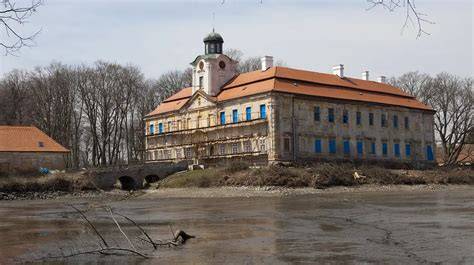
Arcibiskupství pražské a architekti Oldřich Hájek, Jaroslav Šafer, za interiér Bára Škorpilová byli oceněni za Nejlepší rekonstrukci památkového objektu. V katalogu 6. ročníku udílení zmíněné ceny se píše: „Náročná stavební obnova areálu kulturní památky je příkladnou ukázkou skloubení soudobých architektonických prvků s historickým objektem.“
Náročnost projektu spočívá v tom, že šlo o první projekt katolické církve v České republice, který ukazuje nalezení nového využití pro památkově chráněný rozsáhlý areál. Dvoupatrová budova zámku stojí na místě tvrze, která od roku 1356 do husitských válek patřila zbraslavskému klášteru. Roku 1715 ji od Jana Františka z Trautmannsdorfu koupil pražský arcibiskup František Ferdinand hrabě Khünburg. Až do záboru minulým režimem tu pobývali arcibiskupové i nunciové.
Historie a kontext místa
V 70. letech u zámku vznikly ubikace a cvičné prostory pro příslušníky ministerstva vnitra, pohotovostní pluky a takzvané červené barety nasazené 17. listopadu 1989 proti demonstrantům na Národní třídě. Arcibiskupství pražské v loňském roce dokončilo v sousedství zámeckého hotelu administrativně technologické centrum pro japonskou firmu Rigaku. Na pozemcích zdevastovaného velkostatku, které arcibiskupství prodalo, vzniklo pracoviště HiLASE Fyzikálního ústavu Akademie věd ČR a centrum ELI s největším laserem v Evropě. Služeb zámeckého hotelu Chateau Clara Futura využívá jak vědecká komunita zmíněných pracovišť, tak další firmy a turisté.
Současné využití a nabídka hotelu
Nabízí rodinné čtyřlůžkové pokoje, turistické pokoje se sdíleným WC a sprchou na chodbě, třílůžkové, dvoulůžkové i jednolůžkové pokoje. Součástí hotelu je Restaurace sv. K dispozici je dětská herna, podkrovní kaple sv. Den připsání platby na účet poskytovatele až 31. 30. až 22. 21. až 15. 14. až 8. 7. až 0. Poplatek obci není zahrnut v ceně ubytování. Pro rok 2026 je cena poplatku 20 Kč/os./noc. Domácí mazlíček (pes, kočka) povolen po předchozí domluvě. Vyhrazeny pouze 2 pokoje bez koberce. Lze pronajmout dva konferenční sály, dataprojektor a flipchart.
Historické souvislosti a architektonické dědictví
The history of the Bishops House goes back to the Roman period. The history of the Bishops House goes back to the Roman period. Mighty Bishop Duke Jindřich Břetislav had his new bishop’s seat built on the left bank of the Vltava River in the 12th century. Bishops and archbishops that succeeded him kept on adding to it and rebuilding it. One of the most significant alternations took place after a fire in 1249 that was set by rebels against the king Wenceslas I. In the revolutionary year 1419 the house was ransacked and set on fire. Bishop’s seat was moved to a different location and what remained of the house was used for building new houses.
Charles Bridge a další památky pražského historického centra
Charles Bridge is the oldest bridge in Prague and it connects Old Town and Lesser Town. Its foundation stone was laid by Charles IV in 1357. The bridge is 516 meters long and 9.5 meters wide. It was built from sandstone blocks under the supervision of architect Petr Parléř. The tower at the western end of the bridge is actually created by two towers of different appearance, origin, and size. Smaller tower was built in the Roman style and it was part of the first Prague stone bridge - Judith’s Bridge from the first half of the 12th century, but it is older. It was first mentioned only in 1249.
Second, higher tower was being built together with the Charles Bridge in 1357 based on the Old Town Bridge Tower on the other bank of the river. However, it was finished only one hundred years later during the reign of George of Poděbrady. There were no statues planned at that time. Both towers are connected by a gate with crenellation that comes from the beginning of the 15th century. It is decorated by the signs of the lands of Wenceslas IV. Towers and the gate were part of the city fortification.
Kostel sv. Mikuláše a další barokní skvosty
One of Prague’s baroque gems is St.Nicolas Church in Lesser Town Square. This important baroque building with a cupola and bell tower has a richly decorated interior. When Wolfgang Amadeus Mozart visited Prague, he played the pipe organ in this church. It was built by Jesuits after they had obtained emperor’s approval to tear down an old church that used to stand in that location. Its project was designed by architect Christoph Dientzenhofer who also supervised its construction in the period of 1703-1711. Finishing it took longer than expected due to financial problems, plague in 1713, and war events from 1741-1744.
After his father’s deaths, his son Kilian Ignaz Dientzenhofer took over the construction of the church. He created the cupola and part of the tower with the gallery. After his death, the tower had to be completed by Dientzenhofer’s son-in-law architect Anselmo Lurago. He created the upper bell tower in the rococo style. It is as high as the church cupola - 74 meters. The church and the tower always had different owners. The church belonged to Jesuits, the tower to Lesser Town as a compensation for the bell tower that had been torn down before construction of the church. That is why the tower has its own entrance with the sign of Lesser Town above it as well as its own house number - 556. A watcher used to live in the tower and it was his responsibility to observe whether there is a fire in the town. During the communist regime, secret police used watchman’s room in the tower as their secret observatory. They could easily monitor entrances and gardens of western embassies from this spot. Bell tower was used for its original purpose until 1891. The tower has been managed as town property by Prague Information Service since 1992.
Zahradní scenérie a okolí
Together with other three baroque gardens (Vratislavská, Schönbornská and Lobkowická) Vrtbovská garden lies on the slope of Petřín Hill. It is considered to be the most beautiful baroque garden. It was designed by František Maxmilián Kaňka who first redesigned the house and the garden for Jan Josef, Count of Vrtba. Unlike the garden that preserved its baroque character, the palace has undergone significant adjustments. Statues in Vrtbovská garden were created by Matyáš Bernard Braun and frescos by Václav Vavřinec Reiner. Inner decorations in sala terrena were preserved in a great shape. Small romantic island Kampa on the Vltava River offers a look at the part of the city with beautiful houses and old history. This artificial island is separated from Lesser Side by a man-made mill race called Čertovka.
Současné využití a služebnost pro veřejnost
Located only 1.1 km from the 15th - century graveyard Old Jewish Cemetery, the smoke-free Archibald At The Charles Bridge Hotel Prague is only 500 metres from the Museum of the Infant Jesus of Prague. Archibald At The Charles Bridge Hotel Prague also lies within a few blocks of the grand theater National Theatre. Guests can easily get in touch with the history of Prague by visiting the vast Prague Castle, located 1.4 km from this accommodation. Prague Main train station is approximately 25 minutes' walk away, and Malostranská underground station is approximately 10 minutes' walk away. The property boasts a free kid-friendly buffet breakfast. Restaurant Cervena Sedma offers a selection of Czech delicacies and lies only a few steps from Archibald At The Charles Bridge.
- Check-in: from 14:00 until 23:59
- Check-out: until 11:00
- Domácí mazlíček povolen po předchozí domluvě
- Vedlejší pokoje bez koberce k dispozici
Architektonické dědictví a moderní využití
Knole - A British country house & former archbishop's palace
Upozornění: text obsahuje historické souvislosti a popisy, jejichž přesné znění je uvedeno v částech česky a anglicky; vybrané úseky slouží k ilustraci kontextu rekonstrukce.
V sousedství zámku vzniklo administrativně technologické centrum pro japonskou firmu Rigaku a dále HiLASE a centrum ELI s největším laserem v Evropě. Služby zámku a hotelu Chateau Clara Futura slouží vědecké komunitě a turistům. Archivované dědictví a moderní funkční komplexy se propojují prostřednictvím rekonstrukce, která byla oceněna jako příklad součinnosti historického prostředí a současných architektonických prvků.
| Položka | Detail |
|---|---|
| Původ památky | Tvrz z 14. století, areál zbraslavského kláštera |
| Klíčový projekt | Rekonstrukce areálu a nalezení nového využití pro památku |
| Ocenění | Nejlepší rekonstrukce památkového objektu (6. ročník) |
| Současné využití | Hotel, vědecká centra, kanceláře |
tags: #arcibiskupsky #hotel #dyha