Den české státnosti - je úzce spjat s patronem naší země svatým Václavem, kterému stále patří velká pozornost historiků. O jeho životě je známo jen málo - není známo ani to, kdy přesně se narodil - a i o datu jeho úmrtí se vedou polemiky - i když podle většiny historiků je jím rok 935. Přesto se svatý Václav stal patronem českých zemí a vzdáváme mu úctu i dnes, více než 1000 let po jeho smrti. Proč tomu tak je? Na to se Jana Olivová zeptala doktorky Evy Doležalové z oddělení dějin středověku Historického ústavu Akademie věd.
The Czech Republic's central European landscape is dominated by the Bohemian Massif, which rises to heights of 3,000 ft (900 m) above sea level. This ring of mountains encircles a large elevated basin, the Bohemian Plateau. The principal rivers are the Elbe and the Vltava. Czech Republic has an advantageous geographical location in the centre of Europe. Probably about the 5th century A.D. , Slavic tribes from the Vistula basin settled in the region of Bohemia, Moravia, and Silesia. The Czechs founded the kingdom of Bohemia and the Premyslide dynasty, which ruled Bohemia and Moravia from the 10th to the 16th century. One of the Bohemian kings, Charles IV, Holy Roman Emperor, made Prague an imperial capital and a center of Latin scholarship. The Hussite movement founded by Jan Hus (1369?-1415) linked the Slavs to the Reformation and revived Czech nationalism, previously under German domination. A Hapsburg, Ferdinand I, ascended the throne in 1526. The Czechs rebelled in 1618, precipitating the Thirty Years' War (1618-1648). Defeated in 1620, they were ruled for the next 300 years as part of the Austrian empire. A union of the Czech lands and Slovakia was proclaimed in Prague on Nov. 14, 1918, and the Czech nation became one of the two component parts of the newly formed Czechoslovakian state. In March 1939, German troops occupied Czechoslovakia, and Czech Bohemia and Moravia became German protectorates for the duration of World War II. The former government returned in April 1945 when the war ended and the country's pre-1938 boundaries were restored. When elections were held in 1946, Communists became the dominant political party and gained control of the Czechoslovakian government in 1948. Nearly 42 years of Communist rule ended with the nearly bloodless "velvet revolution" in 1989. Václav Havel, a leading playwright and dissident, was elected president of Czechoslovakia in 1989. Havel, imprisoned twice by the Communist regime and his plays banned, became an international symbol for human rights, democracy, and peaceful dissent. The return of democratic political reform saw a strong Slovak nationalist movement emerge by the end of 1991, which sought independence for Slovakia. When the general elections of June 1992 failed to resolve the continuing coexistence of the two republics within the federation, Czech and Slovak political leaders agreed to separate their states into two fully independent nations. On Jan. 1, 1993, the Czechoslovakian federation was dissolved and two separate independent countries were established-the Czech Republic and Slovakia. In Aug. President Václav Havel left office in Feb. 2003, after 13 years as president. Over the years, Havel lost some of his immense popularity with the Czechs, who became disenchanted with his failings as a political leader. But internationally Havel has remained a towering figure of moral authority and courage. In March, Václav Klaus became the Czech Republic's second president. A conservative economist, he and Havel often clashed. In May 2004, the Czech Republic joined the EU. After an inconclusive election in June 2006, the political deadlock was broken in August, with rightist Mirek Topolánek appointed prime minister. His government resigned in October, after losing a no-confidence vote. He formed another government in January 2007. On July 8, 2008, after lengthy negotiations and much debate, the Czech Republic agreed to allow the United States to deploy on its land an antiballistic missile shield. Russia strongly objected to the accord, which views the system as a threat. officials said the shield is meant to deter an attack from Iran. While the Czech Republic held a six-month rotating term as President of the EU, the government collapsed and Prime Minister Mirek Topolanek resigned after his center-right government lost a parliamentary vote of confidence in March 2009. In May, Jan Fischer, an economist, became the head of a caretaker government, which he ran for more than a year, until elections in May 2010. The left-wing Social Democrats (CSSD) fared best in the general election, but did not take a majority and thus could not form a government. The Civic Democratic Party (ODS), which placed behind CSSD, entered into a coalition with the right-wing TOP 09 and centrist Public Affairs. In June, ODS leader Petr Necas became prime minister. Facing a growing deficit, Necas proposed a 10% pay reduction for public workers and strict spending cuts.
The early period The foundation of the city For thousands of years that portion of the Vltava’s course where Prague was to rise was crossed by trade routes linking northern and southern Europe. The region is replete with Paleolithic relics, and Neolithic farmers inhabited the region from about 5000 to 2700 bce. Celts had settlements in the region from about 500 to 200 bce, including the fortified Závist, to the south of Prague. The first settlement at what is now Prague has been traced to the second half of the 9th century. The oldest building was Vyšehrad (hrad, “castle”), set on a commanding right-bank hill. It was followed by what was to become Hradčany, set on an equally commanding left-bank site a little downstream. The dynasty included St. Wenceslas (Václav), who was murdered by his brother Boleslav in about 939 and whose statue now looks down upon the square to which his name has been given; and Boleslav I, whose reign (c. 936-967) witnessed the consolidation of power against a German threat. The little community flourished, and in 965 the Jewish merchant and traveler Ibrāhīm ibn Yaʿqūb was able to describe it as a “busy trading centre.” In 973 the bishopric of Prague was founded.
Medieval growth The economic expansion of the community was reflected in the topography of the city. A market centre on the right bank, opposite Hradčany, developed into the Old Town (Staré město), particularly after the construction of the first stone bridge, the Judith Bridge, over the river in 1170. By 1230 the Old Town had been given borough status and was defended by a system of walls and fortifications. On the opposite bank, under the walls of Hradčany, the community known as Malá Strana (literally, “Small Side”) was founded in 1257. Following the eclipse of the Přemyslids, the house of Luxembourg came to power when John of Luxembourg, son of the future emperor Henry VII, became king of Bohemia. His son, Charles IV, Bohemian king and Holy Roman emperor, had his capital at Prague from 1346 to 1378 and took considerable personal interest in the development of the city. In 1348 he founded Charles University, the first in central Europe, which was later to attract scholars and students from throughout the Continent. His reign also saw the growth of the planned New Town (Nové město) adjacent to the Old Town; construction of the Charles Bridge (1357, reconstructed in 1970) linking the Old Town and the Malá Strana; and the beginning (1344) of the great St. Vitus’ Cathedral, which was not completed until 1929. Other buildings included the Carolinum (the central hall of the university), the town hall (destroyed in 1945), and several churches and monasteries in the New Town. The Jewish ghetto was also developed, and the bishopric was raised to an archbishopric in 1344. By the 14th century Prague had become a major central European city, with the Czech money minted at nearby Kutná Hora serving as the hard currency of the entire region. Foreign merchants, notably Germans and Italians, became economically and politically powerful in uneasy alliance with the kings. The social order, however, became less stable because of the emergent guilds of craftsmen, themselves often torn by internal conflicts. The town paupers added a further volatile element. The Reformation and the Thirty Years’ War Prague played a significant role in the Reformation. The sermons of Jan Hus, a scholar at the university, begun in 1402 at the now-restored Bethlehem Chapel and carrying forward the criticisms of the church developed by the English reformer John Wycliffe, endeared him to the common people but brought him into conflict with Rome; he was burned at the stake in the town of Constance (Konstanz, Germany) in 1415. Popular uprisings in 1419, led by the Prague priest Jan Želivský, included the throwing of city councillors from the windows of the New Town Hall in the incident known as the first Defenestration of Prague. During the next 200 years, the wealthy merchants became ascendant once more, and the late Gothic architectural style flourished in many churches and buildings, reaching a peak in the fine Vladislav Hall of Hradčany. In 1526, however, the Roman Catholic Habsburgs became rulers of Bohemia and attempted to crush Czech Protestantism. The second Defenestration of Prague (1618), when the governors of Bohemia were thrown from the windows of the council room in Hradčany-one of the major events precipitating the Thirty Years’ War-was followed by the decisive defeat of Protestant forces at the Battle of the White Mountain, near the city, in 1620. Twenty-seven Prague commoners and Czech noblemen were executed on the Staroměstské Square in 1621; the city ceased to be the capital of the empire, was occupied by Saxons (1631) and Swedes (1648), and went into a decline hastened by two outbreaks of plague.
The Czech Republic, often called the "Heart of Europe," is a fascinating country with a rich tapestry of geography, culture, and economy. The Czech Republic holds a central geographic position in Europe. The landscape is wonderfully varied. The western part encompasses the Bohemian Basin, while the east features the Moravian hills. Often referred to as the "roof of Europe," its hydrology is remarkable. The Czech Republic experiences a temperate continental climate, characterized by four distinct seasons. Summers are generally warm, ranging from 20-30°C. The country is home to approximately 10.9 million people. The President: The Head of State, currently Petr Pavel (since 2023). For its size, the Czech Republic boasts an impressive number of cultural monuments, with 17 sites currently recognized on the UNESCO World Heritage list. Prague: Known as the "City of a Hundred Spires," its entire Historical Centre is a UNESCO site. Kutná Hora: Renowned for the Gothic St. The Spa Triangle: This includes Karlovy Vary, Mariánské Lázně, and Františkovy Lázně. The Czech economy is highly industrialized, built upon a strong tradition of engineering and craftsmanship. Beer (Pivo): Czechs have the highest beer consumption per capita worldwide. Cybersecurity: The Czech Republic is a significant tech hub. Antonín Dvořák & Bedřich Smetana: World-famous composers. Students often have specific questions about the Czech Republic. The Czech Republic operates as a stable parliamentary republic with a multi-party system. Culturally, the Czech Republic is renowned for its high beer consumption, exquisite Bohemian Crystal, and literary and musical giants like Franz Kafka, Antonín Dvořák, and Bedřich Smetana. The Czech economy is heavily industrialized, with the automotive industry being its backbone. Škoda Auto is the largest company and a major global exporter. Yes, one surprising fact is that Czech society is notably secular, with one of the highest percentages of atheists or non-religious people in the world.
Věcná poznámka: v textu jsou uvedeny údaje o historii, geografie a kultuře České republiky, Prague a dalších regionech. Z pohledu geografie dominují Bohemia Massif a Bohemian Plateau; hlavní řeky jsou Labe a Vltava. Prague je centrem kultury, vzdělávání a architektury a má světově proslulé památky. Vztah politiky, ekonomiky a společnosti je doplněn o významné historické milníky od středověku až po současnost, včetně vzestupu a pádů režimů, vstupu do EU a moderního postkomunistického období.
Pro ilustraci vizuálně
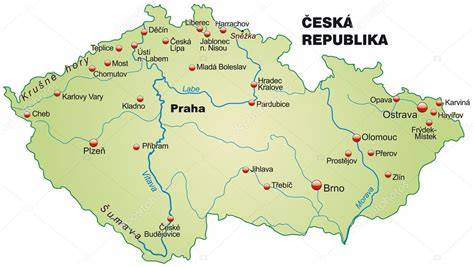
Pokračující vizuální podpory
Dějiny České republiky: Od Keltů po vládu Přemyslovců
Další poznámky zahrnují sociální a kulturní rozměry: kultura, hudba, architektura a průmysl; zemědělství a hospodářský vývoj; jazyk a vzdělání; a politický systém od monarchie přes komunismus k současné parlamentní republice.
Geografie, hydrologie a rozdělení republiky
Bohemian Massif obklopuje velký vyvýšený pánevní čtverec zvaný Bohemian Plateau. Hlavními řekami jsou Labe a Vltava. Bohemia leží uvnitř střední Evropy a region je charakterizován různorodým terénem, který zahrnuje nížiny a pahorkatiny. Vltava protéká centrem země, Praha leží na obou březích řeky a její historické jádro tvoří významnou turistickou a kulturní objednávku.
Historický kontext a vývoj hlavních center
Středověká Praha se vyvinula z důležitého obchodního uzlu na křižovatce severojižních a východozápadních cest. Václavské a Boleslavské období, středověká architektura a vznik Karlovy univerzity patří k zásadním momentům. Rozšíření a urbanizace New Town a Malé Strany podpořilo politické a ekonomické změny.
Kultura, jazyk a identita
Český jazyk, s regionálními dialekty, je vzájemně srozumitelný s Slovakem. Česká kultura je známá pro hudbu a literaturu, kde významnou roli hrají Dvořák a Smetana. Ve městech i na venkově jsou tradiční zvyky, kuchyně a umění, spolu s bohatou historií a architekturou, klíčovými prvky národní identity.